The most convincing examples start with patient-reported outcome measures (PROMs). PROMs turn the patient’s own account of their health into structured, continuous data, exactly what AI models need. There is no mining of clinical notes, which generally record the clinician’s interpretation rather than the patient’s experience. At Vanderbilt, we have shown that PROM scores collected in routine care predict heart failure outcomes. Scaling this requires treating PROMs as core clinical infrastructure as standardized instruments embedded in the electronic health record. In this way every visit generates AI-ready outcomes data alongside clinical care.
Justin Bachmann, MD, MPH
Assistant Professor of Medicine and Medical Director, Vanderbilt Patient-Reported Outcomes Measurement System
Vanderbilt University Medical Center
SingHealth’s initiatives include Singapore Eye Lesion Analyser Plus (SELENA+) that supports the early detection of potentially sight-threatening eye conditions through AI-assisted retinal image analysis, reducing professional grader workload by more than 50%. PENSIEVE-AI, a digital drawing application has been shown to have an accuracy of 93 percent in detecting pre-dementia, as good as current gold standard of detailed cognitive testing. It is simple to use, with participants completing the digital drawing test in under 5 minutes, regardless of their education and language and can be administered by lay-persons. We are also developing an AI enabled Place-based Population Health and Intelligence and Response System that brings together the capabilities of real-time situational awareness to support operational decisions and performance measurement and management for a learning health system.
Scaling requires digital infrastructure and platforms for data, development and deployment, workforce readiness, tight integration into workflows and processes, clinician and patient trust, ethical stewardship and governance.

Prof Chien Earn Lee
Deputy Group CEO
SingHealth (Singapore)
The strongest gains I see are not from AI replacing clinical judgment, but from making good data usable—and increasingly, helping care focus on what matters to each individual. AI in health systems can combine longitudinal outcomes, patient-reported data, clinical records, and patient goals. AI in patient hands lets the patient choose the “destination” and monitor progress toward it, even asking the AI for evidence-based suggestions. We should teach such tips in public health!
That changes outcomes measurement from something done about populations to something that can guide individual care.
To scale this, we need interoperable outcomes data, transparent AI, rigorous measurement of benefit, and tools that patients themselves can use. Equity requires giving patients meaningful access and agency, not merely improving the systems around them.
Dave e-Patient deBronkart
In my own institution’s shift to home-based acute care, redesigning the landscape around the patient, funding, staffing model, information flow, rather than optimizing the hospital pathway, produced gains we hadn’t specifically targeted: shorter lengths of stay, expanded inpatient capacity without new beds, lower cost of care, and a surge in nursing recruitment interest. AI’s biggest opportunity isn’t replacing individual clinical judgment; it’s reading system-level signals in real time, showing where conditions are shifting across a network of homes and hospitals before problems compound, rather than after. Scaling this requires shifting AI from a point-of-care tool into a continuous sensing layer across the whole system, paired with governance and funding structures willing to act on what it reveals, not merely display it on a dashboard.

Lawrence Rosenberg
AI has real potential to advance health equity, but unless implemented with patients and communities, it risks worsening disparities. We are already seeing what equitable AI requires. When researchers discovered a widely used population-health algorithm systematically underrated Black patients’ health needs by using healthcare costs; as a proxy for illness, they rebuilt it. Retraining the AI on actual physiological outcomes (active chronic conditions) instead of cost data equitably enrolled significantly more Black patients into high-risk care management, improving their clinical support and redressing the inequity. However, this also shows the risk of systemically deploying biased algorithms trained on inadequate data or optimised for the wrong outcomes. Scaling the benefits and minimising the risks requires embedding patients across the AI lifecycle, including in: defining health priorities, governing data sharing, training models on patient-defined outcome measures rather than administrative proxies, and enabling patients to contest decisions and regulate AI for equitable care.
Zainab Garba-Sani
Significant impact is achieved where AI is combined with meaningful outcomes data to support clinical and operational decision-making. AI can help identify patients at risk earlier, enable more consistent care pathways, reduce administrative burden and turn complex clinical data into actionable insights. The real opportunity, however, is to connect these capabilities with outcomes that matter to patients – better clinical outcomes, improved quality of life, safer care, shorter waiting times and a better care experience.
To scale this, healthcare needs more than sophisticated algorithms. We need reliable and interoperable data, standardised outcome measures, robust clinical governance and seamless integration into workflows. Most importantly, we need trust. AI should augment clinical judgement, not replace it. The future lies in moving from isolated AI use cases to outcome-driven, responsible and scalable models of care.
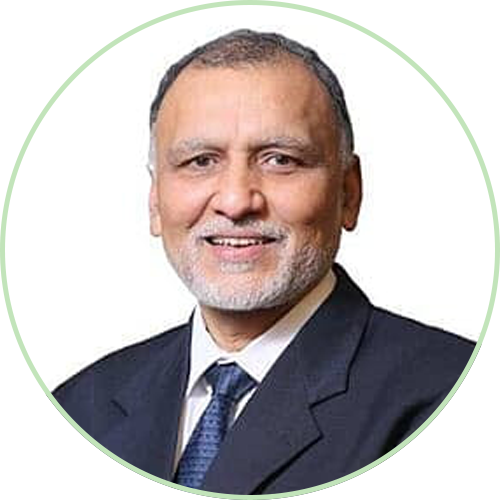
Dr. Bishnu Panigrahi, M.D.
Group Head – Medical Strategy & Operations Group
Fortis Healthcare Ltd.
The clearest gains I’ve seen don’t come from AI on its own. They come when AI sits on top of a value architecture that is already in place. In our work at Vision for Value, and before that leading VBHC across more than 40 integrated practice units in different countrie, the pattern repeats. Outcomes data changes care when four layers are aligned, and AI multiplies their impact.
The first layer is measuring what matters to patients. A domain framework combines clinical outcomes, PROMs, PREMs, complications, access, and equity for each condition. We build on ICHOM standard sets that are a step stone to progression.
The second layer is knowing the true cost of care. Cost Accounting Methodologies lets us put outcomes and resources in the same equation. Without that, “efficiency” is just cost-cutting.
The third layer is making data interoperable. Mapping to the Common Data Models turns fragmented hospital records into analysable longitudinal pathways across institutions and countries.
The fourth layer is building legitimacy. Consensus with clinicians and patients ensures the indicators are trusted, and trust is what makes them get used.
Once those layers exist, AI delivers value in three concrete places:
- Better care. Risk stratification can identify, for example, frail surgical patients or those likely to deteriorate after discharge early enough to intervene through prehabilitation or closer follow-up. e.g. reduction in complications or length of stay.
- More efficient care. Linking outcomes to cost accounting shows where resources don’t add value, such as redundant follow-ups or low-yield imaging. Pathways can then be redesigned around outcomes rather than activity.
- More equitable care. Stratifying outcomes by socioeconomic status, geography, or sex shows where results diverge. Automated PROM collection and analysis can also reach patients who are usually missing from the data.
Scaling this takes five things, and the technology is the easiest of them:
- Standards before algorithms. Shared outcome sets and common data models, so models can be trained, validated, and compared across settings.
- Payment that rewards outcomes. Value-based contracts with different stakholders, including risk-sharing and outcome-based agreements, so improvement is financially sustainable.
- Governance and trust. Transparent validation, bias monitoring, and clear accountability for AI-supported decisions.
- Culture and leadership. Organisations have to learn to act on outcomes data. This is a management challenge before it is a technical one.
- Equity by design. Stratified reporting and inclusive data collection built in from day one, not audited afterwards.
Portugal is an interesting test case: a national health system reorganised into integrated Local Health Units, which can connect primary and hospital care around the patient. The lesson travels well. AI scales when the value infrastructure is ready to receive it.
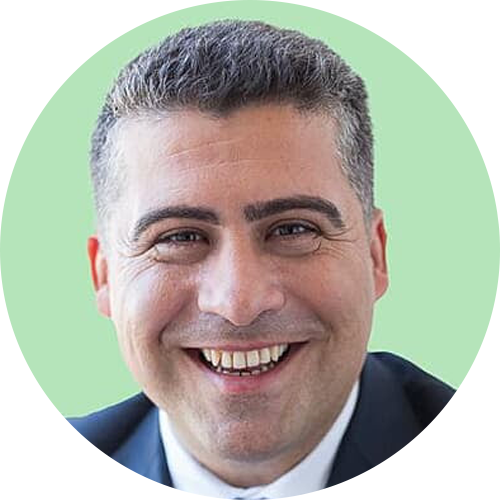
Filipe Costa
Founder & CEO
Vision4Value
For over more than a decade, I have worked to bring patient-reported outcomes into breast cancer care. We have learned so much from patients, yet too little of that knowledge actually finds its way back to them. I have seen how outcomes data can enrich shared decision-making, particularly when treatment options offer similar survival but different consequences for quality of life. AI creates exciting opportunities to take this further: transforming complex data into personalised, understandable information that helps patients see what they might expect, based on the experiences of ‘patients like me’. But the real transformation is not about technology. It is about giving patients meaningful information, with the context needed to understand it, and empowering them to take control of their care. This is where value-based healthcare and digital transformation truly come together: when data become meaningful to patients.
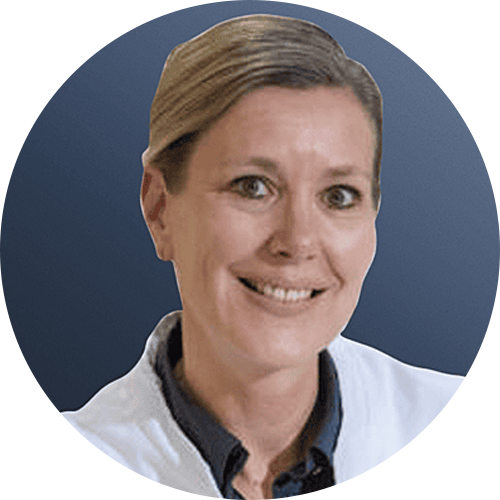
Linetta Koppert MD, PhD
Associate professor surgical oncology, Clinical epidemiologist
Erasmus MC
The gap between measuring outcomes and using them. Many health systems have solved collection; the data come back and sit in a database. This workshop is built around the harder questions: how to return results to clinicians in a form that changes decisions, how to use aggregate data to improve services, and where AI tools actually help. I hope attendees leave with field-tested approaches from teams doing this in routine practice, including lessons from what failed.
Justin Bachmann, MD, MPH
Assistant Professor of Medicine and Medical Director, Vanderbilt Patient-Reported Outcomes Measurement System
Vanderbilt University Medical Center
Creating a conducive ecosystem for accelerated implementation and scaling of innovative Interventions and care models.
Prof Chien Earn Lee
Deputy Group CEO
SingHealth (Singapore)
Since patients are no longer sitting in the back seat, but are taking the wheel themselves, how can healthcare support them in “driving” skillfully and wisely?
That means moving beyond “Is this safe?” to practical guidance: what AI is good for, where it fails, how to verify important claims, when to involve a clinician, and how to make patient-generated insight useful in care. The challenge is not to put patients back in the passenger seat. It is to help them become more capable, informed participants while building sensible safeguards around the risks.
Dave e-Patient deBronkart
Most health systems now measure outcomes rigorously, largely thanks to ICHOM’s own foundational work, but measurement alone doesn’t tell an organization which lever to pull next. I want attendees to leave able to distinguish two kinds of work that get conflated constantly: managing individual patient trajectories well, and engineering the underlying landscape, funding, governance, permitted variation, that determines whether good trajectories are even possible at scale. Once leaders see that distinction clearly, they stop assuming better protocols alone will produce better value, and start asking a sharper question: what in our system’s structure is quietly working against the outcomes we’re trying to achieve, and what would actually have to change in the terrain itself?
Lawrence Rosenberg
Grounded in my own journey of surviving a stem cell transplant to cure sickle cell, and my policy work across emerging technologies (such as AI, genomics, and regenerative medicine), I want attendees to grasp the necessity of patient-driven innovation. I hope attendees can reframe community "opt-out" from a barrier into a rational response to historic exploitation, extractive research, data misuse, and systemic discrimination. It is important for us to all understand that standard engagement can worsen distrust by asking communities for time, data, and investment without sharing power or returning value. Ultimately, the challenge is ensuring data-driven innovations like AI do not just improve care for the most privileged but transform it for those with the greatest need. Doing so is not only a moral and ethical imperative, but a clinical and financial one required for the resilience and strength of entire health systems.
Zainab Garba-Sani
I hope attendees leave better equipped to address the gap between AI experimentation and measurable healthcare value. It’s not limited to ‘Can we use AI?’ rather ‘Where will it make a meaningful difference?’, ‘How do we implement it responsibly? and ‘How will we know it has improved care?’.
The challenge is to establish a clear connection between technology and outcomes – including clinical outcomes, patient-reported outcomes, experience, safety and efficiency. This requires leaders to think beyond technology implementation and consider clinical workflows, workforce readiness, governance, data quality and patient trust.
My hope is that the session encourages a practical approach: start with a clearly defined healthcare problem, identify the outcome that matters, use technology responsibly, and continuously measure whether it is delivering meaningful value for patients and the healthcare system.
Dr. Bishnu Panigrahi, M.D.
Group Head – Medical Strategy & Operations Group
Fortis Healthcare Ltd.
Most organisations are good at collecting outcomes data and poor at turning it into decisions. My hope is that attendees leave knowing how to close that gap. That means going from measurement to action by connecting outcomes to costs, embedding them in clinical and management routines, and linking them to contracts and incentives. It also means knowing where AI genuinely helps in that journey and where it simply automates a broken process. In short: how to move from dashboards to decisions, and from pilots to systems.
Filipe Costa
Founder & CEO
Vision4Value
How do we move from collecting outcomes to actually using them to empower patients? During my session, I will bring shared decision-making to life through a consultation with a patient on stage. Because ultimately, this is where all our efforts should come together: in the conversation between a patient and their healthcare professional. As a surgical oncologist, I know how profoundly treatment decisions can affect someone’s life. Patients deserve more than medical information and survival statistics. They deserve to understand what different options could mean for their quality of life, their daily activities and their future. I hope attendees leave inspired to rethink how we use data: not simply to measure performance, but to support meaningful conversations, personalised decisions and care that truly reflects what matters to each individual. My ambition is to move from patients as sources of data to patients as the primary beneficiaries of data.
Linetta Koppert MD, PhD
Associate professor surgical oncology, Clinical epidemiologist
Erasmus MC
ICHOM 2026 sits at the intersection of two developments. Many health systems now collect standardized outcomes data at scale, and AI has finally made those data usable. Structured, patient-reported health status is the ideal substrate for prediction models and decision support. ICHOM puts providers, payers, industry, patients, and policymakers at the same table. The question facing healthcare leaders is no longer whether to measure what matters to patients; it is how to change care with those measurements.
Justin Bachmann, MD, MPH
Assistant Professor of Medicine and Medical Director, Vanderbilt Patient-Reported Outcomes Measurement System
Vanderbilt University Medical Center
Learning from each other and generative conversations with like-minded people.
Prof Chien Earn Lee
Deputy Group CEO
SingHealth (Singapore)
Because healthcare is finally getting serious about measuring what matters to patients, not just what’s easy to count. ICHOM brings together people working on the practical side of that shift: outcomes, data standards, implementation, and now AI. That makes it a useful place to ask not just “What can the technology do?” but “What are we actually trying to improve, for whom?” And isn’t that the whole point?
Dave e-Patient deBronkart
ICHOM built the discipline this field runs on: rigorous, standardized measurement of the outcomes that matter most to patients. That work is foundational and still expanding, but the community is reaching a point where measurement alone is no longer the binding constraint. The 2026 meeting matters because it’s where the next conversation is happening, not just how to measure value more completely, but how to act on it, how to build systems whose structure moves naturally toward better outcomes rather than requiring constant, exhausting correction. For leaders navigating cost pressure and workforce strain at once, this is where the field’s most rigorous outcomes thinkers and the people actually redesigning care delivery are working the same problem together.
Lawrence Rosenberg
This era of health AI is a pivotal moment for healthcare leaders. While the potential benefits are vast, biased and inadequate data risk scaling health disparities at speed. ICHOM has long championed the drivers of value-based healthcare, such as patient-reported outcome measures. In an increasingly data-driven world, their significance is greater than ever. ICHOM 2026 is a must-attend event because it brings healthcare professionals and leaders together to solve the defining question of how we scale patient-centred, value-based care alongside rapid technological advancement. It provides the opportunity to reflect and problem solve around shared challenges, ultimately moving us forward in ensuring that value-based healthcare and emerging technology align to deliver safer, higher quality and more equitable care across health systems internationally.
Zainab Garba-Sani
ICHOM 2026 brings together healthcare leaders around a fundamental question: How do we move from measuring healthcare to actually improving it?
At a time when AI, digital health and data are rapidly transforming healthcare, outcomes measurement provides an essential anchor. Technology can help us generate and analyse more information, but the real test is whether that information leads to better decisions, better experiences and better outcomes for patients.
ICHOM offers a unique opportunity to learn from healthcare systems and organisations that are translating outcomes thinking into practice, while bringing together perspectives from clinicians, patients, leaders and innovators. For healthcare leaders, it is a platform to challenge conventional thinking, share real-world lessons and explore what it takes to make outcome-focused care scalable and sustainable. It is ultimately about turning data and innovation into measurable value for patients.
Dr. Bishnu Panigrahi, M.D.
Group Head – Medical Strategy & Operations Group
Fortis Healthcare Ltd.
Value-based healthcare is at an inflection point. The case for measuring outcomes has been made, and the question now is implementation at scale, with AI raising both the opportunity and the stakes. ICHOM is where the whole ecosystem is in one room: clinicians, patients, payers, policymakers, industry, and researchers. It is also a place to benchmark against peers who have already made the leap. The conference takes place 7–9 December 2026 at the Palais des Congrès de Montréal, where the global VBHC community will focus on translating frameworks into practice (ICHOM). For leaders, it is the fastest way to learn what works, what doesn’t, and who to build it with.
Filipe Costa
Founder & CEO
Vision4Value
Because we are at a turning point in healthcare. For years, we have worked to define, collect and compare outcomes that matter to patients. ICHOM has been instrumental in driving this movement internationally. Now we have the opportunity to take the next step: using those outcomes to fundamentally change how healthcare is delivered. Digital transformation and AI can help us move towards more personalised, proactive care, increasingly beyond hospital walls. But this requires more than technological innovation. It requires leadership, collaboration and the courage to rethink established practices.
Linetta Koppert MD, PhD
Associate professor surgical oncology, Clinical epidemiologist
Erasmus MC
Discover five themes exploring the biggest priorities in value-based health care. Explore the agenda and meet the global leaders, innovators, and changemakers bringing each conversation to life.